New Jersey Court Found Car Scammers Guilty and Awarded Major Compensation
In April 2014, a group of victims filed a lawsuit in the District Court of New Jersey against companies engaged in selling cars abroad and one individual, accusing the defendants of using a fraudulent 'bait-and-switch' scheme.
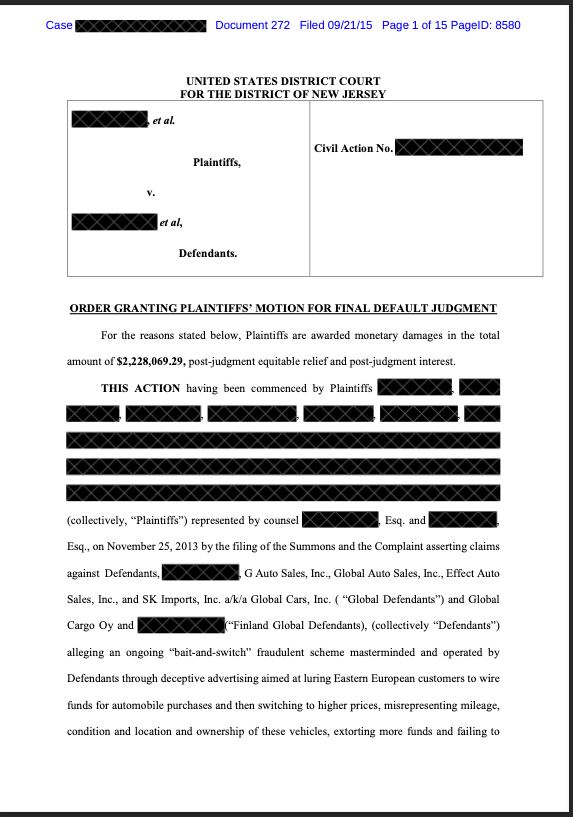
In April 2014, a group of victims filed a lawsuit in the District Court of New Jersey against companies engaged in selling cars abroad and one individual. The plaintiffs accused the defendants of using a fraudulent 'bait-and-switch' scheme, deliberately misleading foreign buyers.
The judicial investigation revealed that the racketeering activities of Global Auto Enterprise had begun at least as far back as 2008. This led to an investigation by the New Jersey Attorney General and the Consumer Fraud Division. On 19 November 2010, a court order was issued prohibiting the company's activities, imposing civil penalties, and requiring compensation to victims.
Despite this, Global Auto Enterprise continued its fraudulent operations. In 2012, predicate acts of racketeering were committed against the plaintiffs, and by February 2014 the activities had spread to 18 US states, where offences involving wire fraud were committed.
The defendants also filed fictitious bankruptcies in order to continue their unlawful operations. Their actions were organised in such a way as to demonstrate a link between the predicate acts and the threat of continued wrongdoing. Mail and wire fraud were perpetrated on a daily basis, aimed at deceiving foreign car buyers through GlobalAutoUSA.com and other sites registered by the defendants.
In June 2014, the plaintiffs filed a motion to freeze the defendants' assets and for expedited discovery of assets connected to the defendants. As a result, the court froze the defendants' assets and shut down their websites.
Ultimately, the court found the defendants guilty and ordered them to pay damages in an amount three times the original loss, plus additional compensation. The temporary restrictions were not lifted, and the plaintiffs were granted additional court orders.